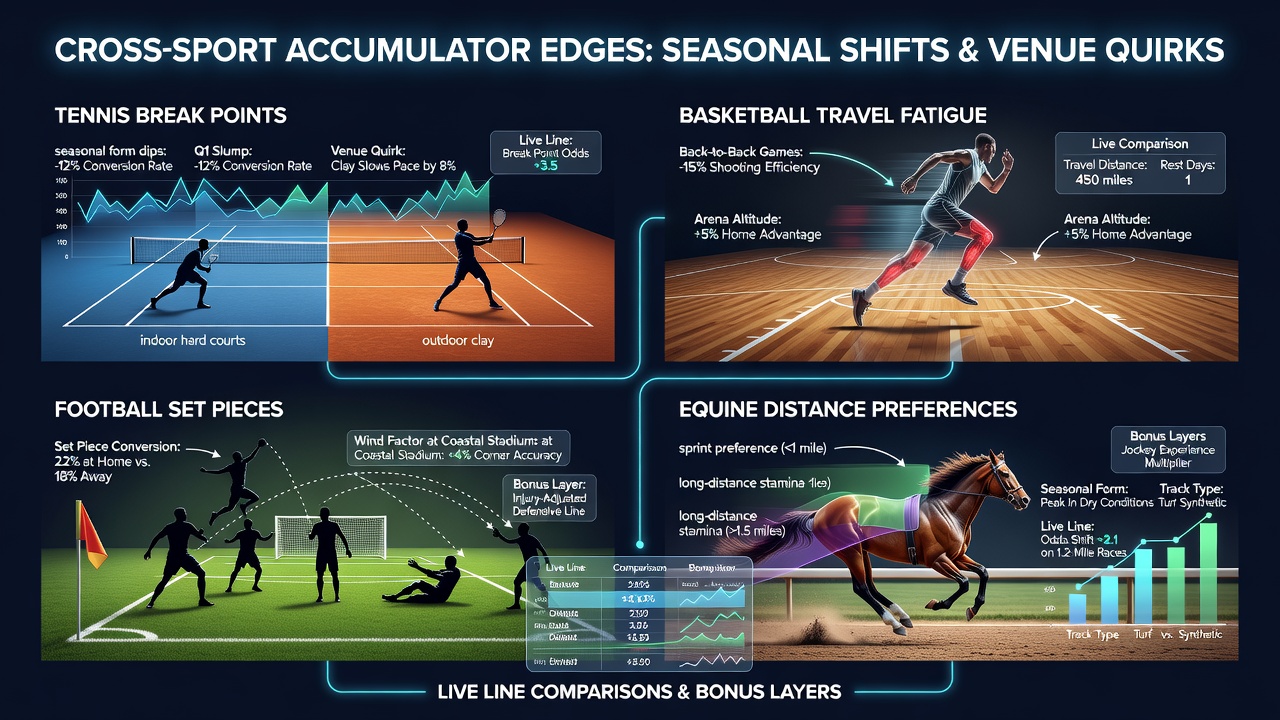
Seasonal Form Fluctuations and Venue Quirks Reshaping Cross-Sport Accumulator Edges in Tennis Break Points, Basketball Travel Fatigue, Football Set Pieces, and Equine Distance Preferences via Live Line Comparisons and Bonus Layers
Seasonal shifts in athlete performance combine with specific venue characteristics to alter accumulator opportunities across tennis, basketball, football, and horse racing, especially when bettors compare live lines and layer bookmaker bonuses during November 2026 schedules. Observers note that late-year transitions bring measurable changes in break-point conversion rates on indoor hard courts, fatigue patterns in basketball travel schedules, set-piece conversion in football matches played on variable pitch surfaces, and distance suitability in equine events transitioning from autumn turf to all-weather tracks.
Tennis Break Points Under Seasonal and Venue Pressure
Indoor tournaments in November often feature faster conditions that compress break-point windows, and data from recent seasons shows conversion percentages dropping by several points on surfaces with lower bounce compared to outdoor clay swings earlier in the year. Bettors tracking live odds notice these adjustments appear first in early-round matches where players adjust to reduced rally lengths, while accumulators gain edges when lines move after the first set reveals actual break-point hold rates. Venue quirks such as lighting variations in European indoor arenas further influence return statistics, prompting comparisons across multiple bookmakers to capture the tightest spreads before bonus wagering layers multiply small edges into larger accumulator payouts.
Basketball Travel Fatigue and Its Line Impact
November schedules place heavy travel demands on NBA and European league teams crossing time zones, and studies from sports performance institutes indicate measurable declines in fourth-quarter efficiency after consecutive road games. Live betting markets adjust totals and spreads within minutes of tip-off once early scoring trends confirm fatigue effects, yet discrepancies between operators create opportunities for accumulator builders who stack under totals with player prop unders. Those comparing lines across platforms frequently identify 1-2 point variances in adjusted totals tied directly to back-to-back travel, allowing bonus funds to offset vig while constructing multi-leg wagers that include both team totals and individual output forecasts.
Football Set Pieces and Venue-Specific Patterns
Stadium dimensions and pitch conditions in November fixtures alter set-piece success rates, particularly when teams face variable weather that affects delivery accuracy and aerial challenges. Statistical tracking reveals certain grounds produce 15-20 percent higher conversion on corners and free kicks due to narrower playing areas, and these patterns surface quickly in live odds as bookmakers recalibrate after early match segments. Accumulator strategies benefit when bettors monitor multiple operators for divergent set-piece props, then apply welcome or reload bonuses to extend stake value across correlated legs involving both goal scorers and card markets that often move together on set-piece heavy sides.
Equine Distance Preferences in Seasonal Transitions
Horse racing form fluctuates with distance suitability as autumn programs give way to winter all-weather meetings, and trainers report performance shifts when runners move from longer turf routes to shorter synthetic distances. Live odds markets reflect these adjustments through morning line revisions that tighten or widen based on workout data released days before entries, while comparisons across betting platforms highlight places where distance-related overlays persist longer than expected. Accumulators incorporating equine selections gain flexibility when bonus layers cover the added legs, allowing bettors to pair distance-preference plays with other sport outcomes without increasing overall exposure.
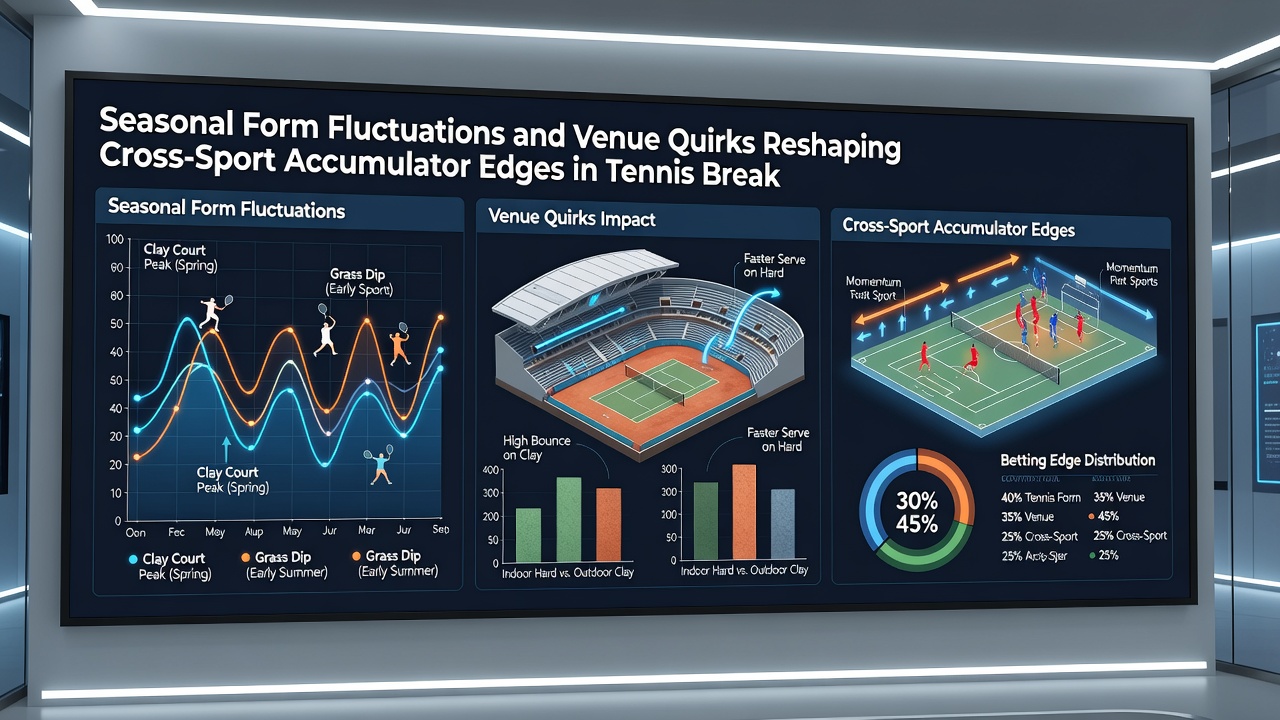
Cross-sport accumulator construction requires ongoing line monitoring because venue and seasonal factors create staggered price movements that rarely align across operators. Research from the Australian Gambling Research Centre demonstrates that bettors who refresh multiple live markets within short windows capture more favorable combinations before adjustments propagate. Bonus structures, including enhanced odds and stake refunds on near-miss accumulators, further amplify these edges when applied to legs already shaped by fatigue, distance, or set-piece data.
Integrating Live Comparisons with Bonus Layers
Effective strategies combine real-time line shopping across tennis break-point markets, basketball totals adjusted for travel, football set-piece props, and equine distance overlays into single accumulators. November 2026 schedules intensify these dynamics as indoor tennis circuits overlap with early basketball seasons and year-end football campaigns, while horse racing calendars shift toward all-weather emphasis. Those who maintain spreadsheets tracking historical venue impacts alongside current live movements often identify correlations that persist across multiple fixtures, then deploy bonus credits to increase leg counts without proportional risk increases. Regulatory reports from the Canadian Gaming Regulatory Authorities note rising volumes in such multi-sport products during transitional months, underscoring the need for precise line comparison before commitment.
Conclusion
Seasonal form fluctuations and venue quirks continue to reshape accumulator edges through measurable effects on tennis break points, basketball travel fatigue, football set pieces, and equine distance preferences. Live line comparisons across operators, combined with strategic use of bonus layers, allow participants to navigate these variables while maintaining structured exposure throughout November 2026 and beyond. Data-driven monitoring remains central to identifying when these factors produce sustained pricing discrepancies worth incorporating into multi-leg wagers.